
Confidence Is High. Integration Is Rare.
New research from WSJ Intelligence and Creative Planning surveyed more than 500 U.S. high-net-worth investors with at least $2 million in investable assets — half with $10 million or more — about how they manage their wealth. Across the sample, respondents describe themselves in similar terms: knowledgeable, confident and eager to keep learning.
Yet when asked how their tax, legal and investment advisors work together, only 19% describe a fully integrated team operating from a single, coordinated plan. The survey found that for most investors, advice may be split across advisors who rarely, if ever, communicate with one another.
The research suggests the gap has less to do with how much investors know and more to do with whether the advice they've gathered functions as one plan or several separate ones.

The research suggests the gap has less to do with how much investors know and more to do with whether the advice they've gathered functions as one plan or several separate ones.
Read the full report — get the complete findings from 500+ high-net-worth investors.
What Integrated Wealth Planning Means
Integrated wealth planning describes an approach to financial planning in which investment, tax, estate and liquidity decisions are made together by advisors working from a shared view of a household's full financial picture rather than in separate conversations.
It's a different standard than simply having several qualified advisors. An investor can work with a skilled accountant, an experienced estate attorney and a capable investment manager and still lack integration if those professionals aren't actively coordinating with one another.
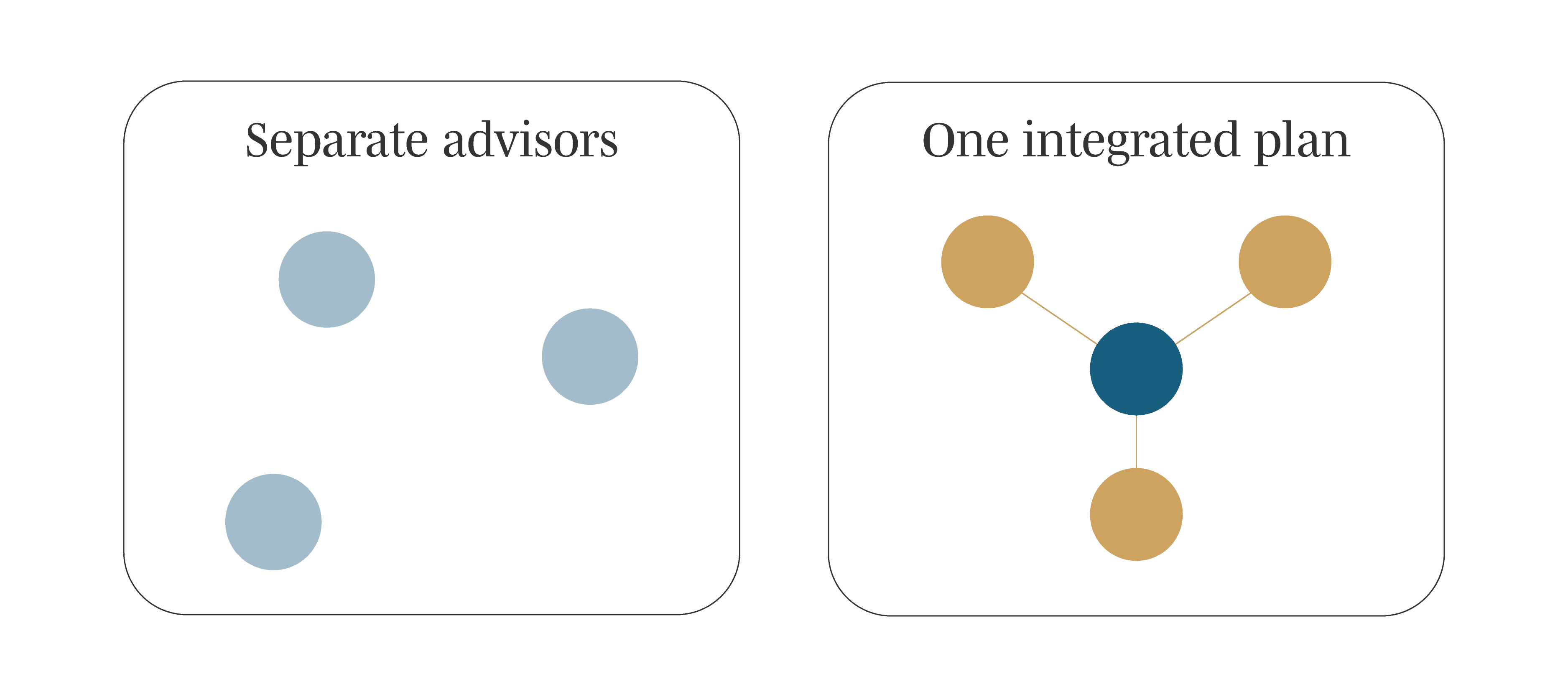
The WSJ Intelligence and Creative Planning research draws this distinction directly, sorting respondents by how their advisors actually work together — from a single integrated team to separate firms coordinating from a shared plan to arrangements with real gaps between advisors. Creative Planning's broader overview of wealth management for high-net-worth individuals covers what integration can look like day to day; the full report looks specifically at what separates these advisory arrangements from one another.
Sophistication Isn't the Constraint
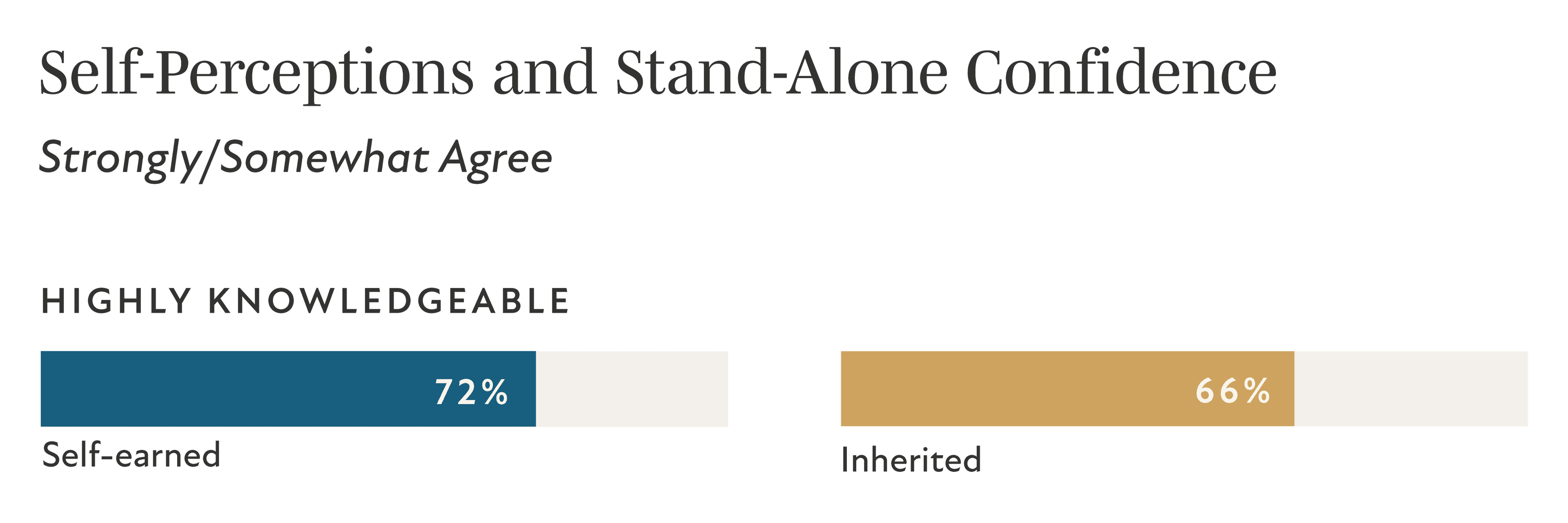
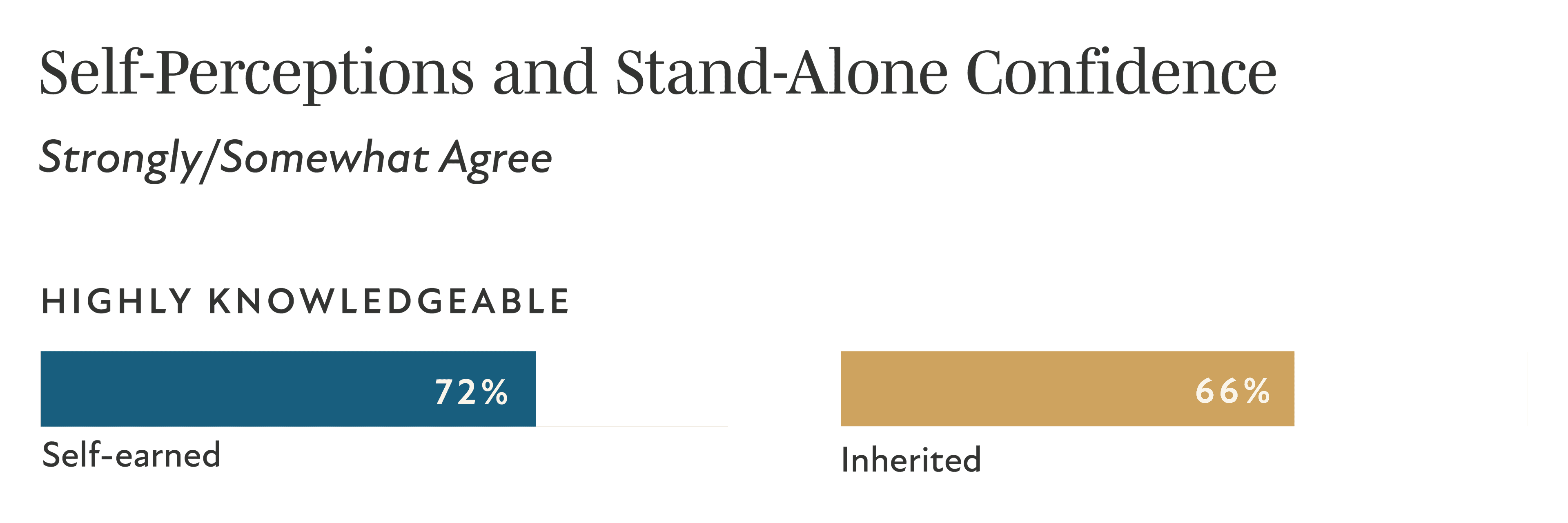
If a lack of integration were mainly a knowledge gap, the research would likely show low financial confidence. It shows the opposite. The survey found that 72% of self-earned wealth holders and 66% of those managing inherited wealth describe themselves as highly knowledgeable about their finances — and both groups report comparable confidence on related measures too.
At the same time, the survey found that 75% of respondents report acute anxiety underneath that confidence. Taken together, the research points to a pattern: investors aren’t short on financial knowledge. What's inconsistent is whether that knowledge is backed by advisors who are actually coordinating with one another — a theme the full report explores in more depth.
The Coordination Gap
The clearest evidence of a coordination gap lies in how respondents describe their own advisory relationships. Just 19% say their tax, legal and investment advisors function as a single, fully integrated team — the most integrated of the six arrangements the survey asked about. Another 22% work with a coordinated multi-firm team where advisors at different firms actively collaborate, 24% describe their advisors as only partially coordinated with real gaps between them, and 8% use multiple firms whose advisors operate independently. The remaining respondents rely on a single advisor (18%) or manage their finances themselves (9%).
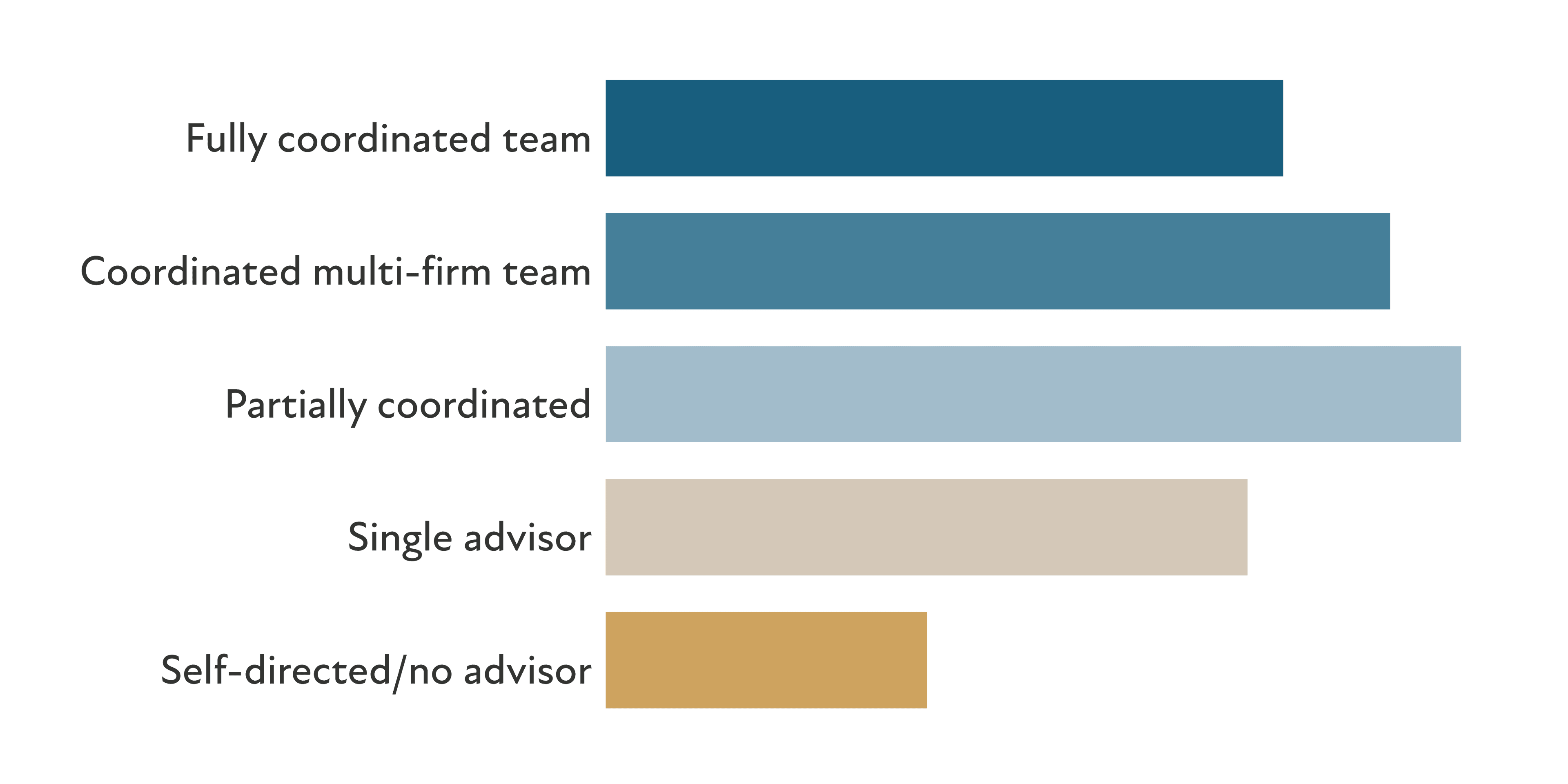
Source: The Architecture of Modern Wealth, WSJ Intelligence & Creative Planning Study. Base: total respondents n=503. Q. How are your financial, legal, tax, and estate advisors coordinated in managing your wealth? Fieldwork conducted June 5-July 3, 2026.
Fewer than 1 in 5 respondents, regardless of how their wealth was built, have a fully integrated advisory team
Most work across more than one relationship, with real differences in how well those relationships communicate.
Fragmentation by Default, Not by Design
Across the sample, the pattern looks less like a decision anyone made and more like something that accumulated over time — one advisor retained for one need, then another for the next. The research suggests that regardless of how wealth was built, most investors are working with capable, well-qualified people. What varies is whether that expertise adds up to a single plan or a set of separate ones.
The full report breaks the 19% down by wealth source, age and profession. Read the full report.
Where the Gap Shows Up First: Liquidity
Coordination gaps tend to surface most clearly around liquidity — your ability to convert wealth to cash when it's needed most, and a core piece of broader risk management.
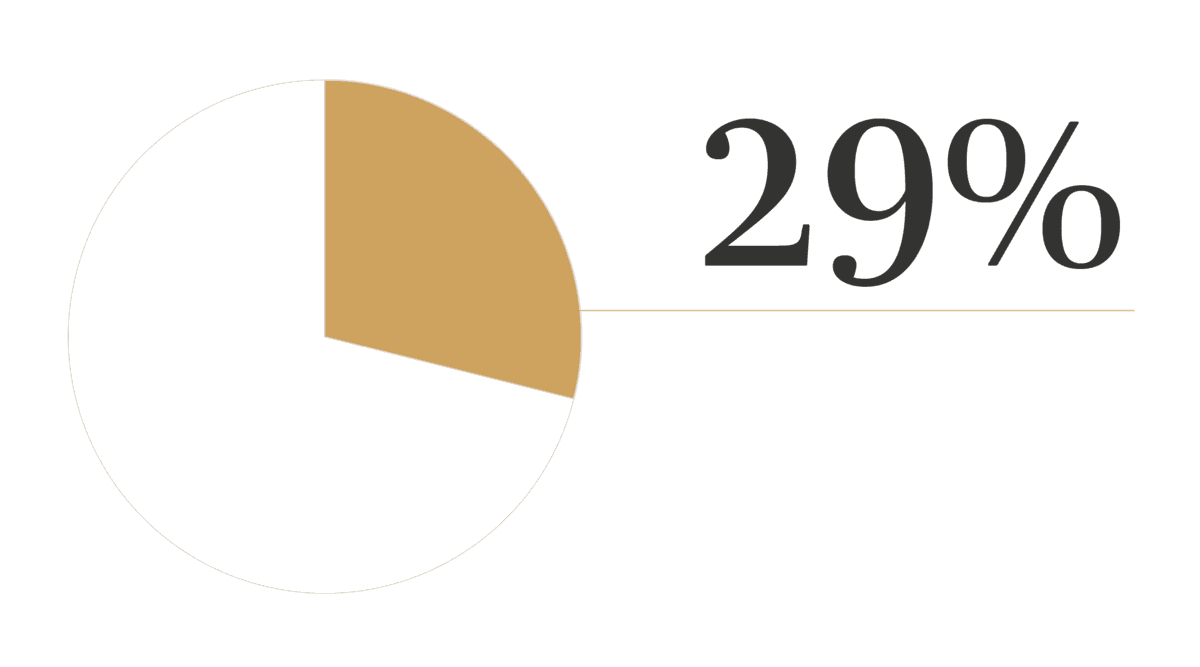
Just 29% of wealth holders have a formal, documented and stress-tested liquidity strategy for major cash needs or tax calls.
The Gap: Another 41% have considered a liquidity strategy but never formalized it, leaving most investors without a tested plan.
If a tax bill or a capital call landed on your desk tomorrow, would you know exactly where the cash comes from, or would you be figuring it out in real time?
The Most Common Blind Spot Is Taxes
Across the research, tax planning is where investors report being least prepared — and it's the gap that tends to cost the most, because it arrives on a deadline.
Among inherited-wealth holders who have navigated a major liquidity event, 55% say tax planning was where they were least prepared, and 38% name cash-flow management. Self-made investors who have been through one report the same top blind spot.
The mechanism is usually simple and preventable. Equity compensation offers a clear illustration: When a block of shares vests, withholding is often applied at the flat supplemental wage rate the IRS uses for that kind of payment, which can be well below a high earner's actual marginal tax rate. The difference isn't forgiven. It comes due at filing — potentially months after the shares vested — and covering it can mean selling company stock at whatever price the market happens to offer that week.
The outcome depends entirely on whether the vesting schedule and tax exposure are visible to the same people. When they aren't, the bill is a surprise. When they are, it's a line item someone planned for.
What's Inside the Report
- Persona-by-persona findings across entrepreneurs, executives, professionals and tech wealth creators
- How liquidity readiness and blind spots vary across the sample
- What the research found about family governance — and why so few investors have it in place
Beyond the Will: Legacy and Governance
Estate planning and legacy planning are related, but they aren't the same thing. Estate planning covers the legal documents — including wills, trusts and powers of attorney — that determine how assets are distributed. Governance is the ongoing process of how a family communicates about its wealth and makes decisions regarding it over time.
Most respondents with an estate plan have the legal documents in place. Far fewer — just
14% — report having any formal household structure or process for making and communicating wealth-related decisions. That gap can extend directly to the next generation: Fewer than 1 in 10 investors age 55 or older feel fully prepared to talk with their heirs about transferring wealth. Across the research, a consistent pattern emerges — investors complete the one-time legal task then stop short of the ongoing work that keeps a plan current.
The report covers what investors said about preparing their heirs. Read the full report.
Self-Earned and Inherited Wealth
The research sample is 79% self-earned wealth and 21% inherited or legacy wealth, and the coordination gap appears at comparable levels in both groups.

What differs is what tends to expose it. Entrepreneurs and technology industry wealth creators frequently describe struggling to build a coordinated advisory team when their wealth grew significantly. Inherited-wealth holders describe a more structural version of the same issue: many work with multiple firms, often stand-alone specialists, who don't necessarily communicate with one another.
Whether wealth arrived quickly through a business or equity event or was passed down through a family structure, the research suggests the underlying issue looks similar: advice gathered in pieces rather than built as one plan.
How Your Wealth Was Built Shapes Where the Gap Appears
Wealth that arrived suddenly creates different exposures than wealth built steadily over a career. An equity event can outpace the planning around it, leaving a large share of net worth concentrated in a single asset with no liquidity strategy behind it. Wealth accumulated over decades is more likely to carry an estate plan written when the balance sheet was a fraction of its current size.
Neither pattern is a function of how much someone knows. Both are a function of whether the advisors involved were working from the same plan at the moment it mattered.
So the more useful question isn't how your peer group compares. It's whether your own liquidity plan, tax coordination and estate documents have kept pace with the wealth they're meant to cover — and where, specifically, they haven't.
See where these gaps tend to open and when. Read the full report.
What the Research Suggests
Across every segment of the sample, the research points to a consistent pattern: financial confidence and knowledge are common, but the coordination needed to act on that knowledge — across investment, tax, estate and liquidity decisions — is less so. That gap can matter most at moments with the least room for error, such as a liquidity event, a wealth transfer or a significant change in life circumstances.
The full report explores these findings in more depth, including how coordination, liquidity readiness and legacy preparedness vary by wealth source, age and profession.
Methodology
This report, conducted by WSJ Intelligence on behalf of Creative Planning, presents the key findings of a survey of U.S. high-net-worth investors ($2M+ in investable assets). Half of respondents have $10M+ in investable assets. Field dates: June 5-July 3, 2026.
Sample size: 503 respondents. Wealth accumulation: 79% self-earned, 21% legacy.
Full study: The Architecture of Modern Wealth: First-Generation "Self-Earned" Creators and Multi-Generational "Inherited" Stewards, WSJ Intelligence & Creative Planning.
Read the full report: Why Uncoordinated Advice Leaves the Wealthy Unprepared
Talk with a Creative Planning advisor about integrated planning.
Featured Insights
- Wealth Management for High-Net-Worth Individuals - Discover tailored wealth management for high-net-worth individuals, from family office services to trusts, tax and investment strategies with Creative Planning.
- Setting Up Family Governance for Multigenerational Wealth - Build a family governance structure that simplifies complex wealth decisions, aligns generations and helps safeguard your family’s long-term legacy.
- Tax-Efficient Estate Planning Structures - Learn how high-net-worth estates can use trusts, gifting, investment strategies and philanthropy to transfer wealth tax efficiently while preserving family and charitable goals.
Creative Planning, LLC, provides investment advisory services and works in coordination with Creative Planning companies to deliver integrated tax, legal and insurance services as well as other financial services. This material is for informational purposes only and is not intended as investment, tax or legal advice. Past performance does not guarantee future results. Information contained herein is believed to be reliable but is not guaranteed.